Truth in Taxation Meeting: What Justin Residents Need to Know
The City of Justin hosted a Truth in Taxation workshop this week to help residents better understand how property taxes are calculated in Texas and how the city’s budget and tax rate process works.
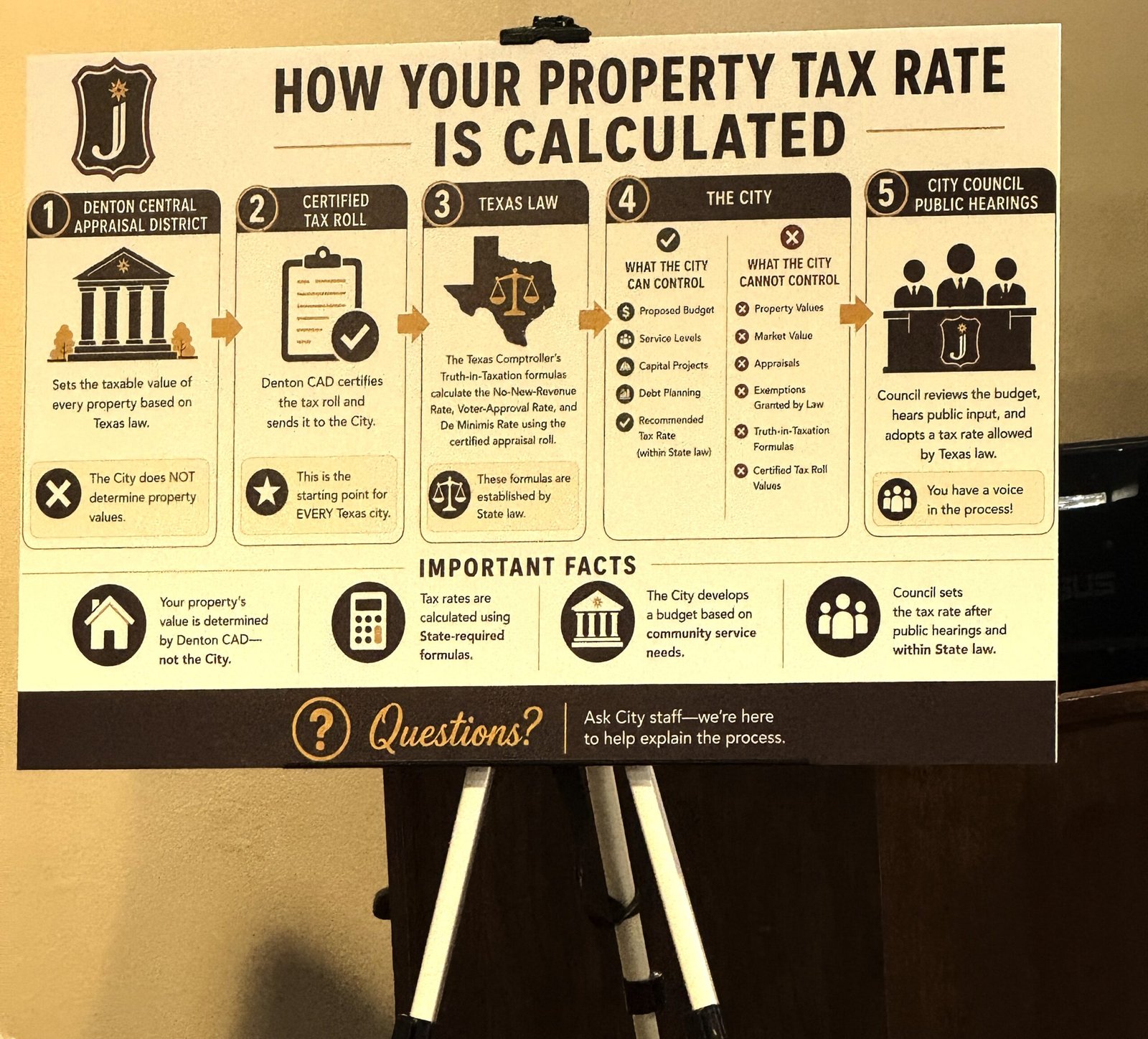
The goal of the meeting was education and transparency, not to announce a tax increase or proposed rate. City officials explained that the tax rate process involves many moving parts, including state formulas, property values, exemptions, and certified appraisal information from Denton Central Appraisal District (DCAD).
No Tax Rate Has Been Set Yet
City officials emphasized that no proposed tax rate has been finalized because they are still waiting on certified property values from DCAD. Even small changes in appraisal values can significantly impact the tax rate calculation.
The proposed tax rate is expected to be discussed at the August 13, 2026 City Council meeting, with additional opportunities for public input during the required public hearings.
How Tax Rates Are Determined
Texas cities have three options when setting a property tax rate:
No-New-Revenue Rate – A rate designed to bring in approximately the same amount of revenue from existing properties as the previous year.
Voter-Approval Rate – The highest rate a city can adopt without automatically requiring voter approval. If a city exceeds this rate, an election may be required under state law.
De Minimis Rate – An option available to smaller cities that allows additional revenue based on a state formula. Justin qualifies for this option because the city population is below the state threshold.
Officials explained that because of changes in state formulas and appraisal calculations, some communities are seeing situations where the No-New-Revenue Rate may actually be higher than the Voter-Approval Rate. While confusing, this is the result of how the state formulas are structured.
Your Tax Bill Is More Than Just the Tax Rate
One of the biggest takeaways from the meeting was that your tax bill is affected by both the tax rate and your property’s taxable value.
The City of Justin does not determine property values. Those values are set by DCAD based on state guidelines and market data. Residential appraisals are based on sales information around January 1 of each tax year, which means changes in the housing market may not immediately show up in property values.
Officials also reminded residents that their property tax bill is divided among multiple taxing entities, including:
- Northwest ISD
- City of Justin
- Denton County
- Other applicable districts
For many homeowners, the school district portion makes up the largest share of the total property tax bill.
Should You Protest Your Property Value?
A major discussion during the meeting focused on property appraisal protests.
Officials encouraged homeowners to review their appraisal each year and file a protest if they believe their property value is inaccurate. They noted that homeowners can complete the process themselves and do not necessarily need to hire a third-party company.
The Appraisal Review Board (ARB) can consider factors beyond just comparable sales, including property-specific circumstances and other evidence provided by the homeowner.
Officials explained that when many homeowners protest and successfully lower their values, those who do not protest may see a larger share of the overall tax burden. Their message was simple: understand your appraisal and participate in the process if you have concerns.
Understanding Exemptions & Freezes
Residents also asked about over-65 exemptions and property tax freezes.
Officials explained that these are two different programs:
- Over-65 Exemption: Reduces taxable property value.
- Over-65 Tax Freeze: Limits the amount of taxes a qualifying homeowner pays from increasing.
They also clarified that recent state increases to the homestead exemption for school district taxes were separate from local tax decisions and were funded through state changes. Homeowners who believe their exemptions are not being applied correctly were encouraged to review their property records and contact the appraisal district.
Questions About Future Bonds
Residents also asked questions about future bond proposals and how large projects are planned.
City officials clarified that there are currently no discussions underway regarding a future bond election. They emphasized that this meeting was specifically about understanding the tax rate process and budget timeline.
Residents expressed the importance of community involvement early in discussions about future projects, including opportunities for residents to provide input before major decisions are made.
What Happens Next?
As the city continues through the budget process, residents are encouraged to:
- Attend upcoming City Council meetings
- Review published budget and tax information
- Ask questions and participate in public hearings
City officials said the purpose of the workshop was to help residents better understand “how the sausage is made” when it comes to Texas property taxes and local budgeting.
Additional educational resources, including tax information and financial documents, are available through the City of Justin website, and staff said they are working to make information available beyond social media so all residents have access.