Before the Grocery Store Run
How farming, family and a little elbow grease helped put Thanksgiving on the table in early Justin
There was a time when preparing a Thanksgiving meal around Justin looked a whole lot different than it does today. No quick trip to the grocery store for a forgotten ingredient, no refrigerated delivery waiting at the front door and certainly no last-minute dash for a frozen turkey.
For families living in and around Justin in the early 1900s, food was closely connected to the work happening right outside their homes. Farms supplied much of what families ate, livestock provided meat and other products, gardens contributed vegetables, and the changing seasons helped determine what would be available at the table.
And we don’t have to imagine all of it. Thanks to a collection of historical photographs preserved by the Courthouse-on-the-Square Museum in Denton, we can get a glimpse of what agricultural life looked like in the Justin area nearly a century ago.
A photograph that brings Thanksgiving history close to home
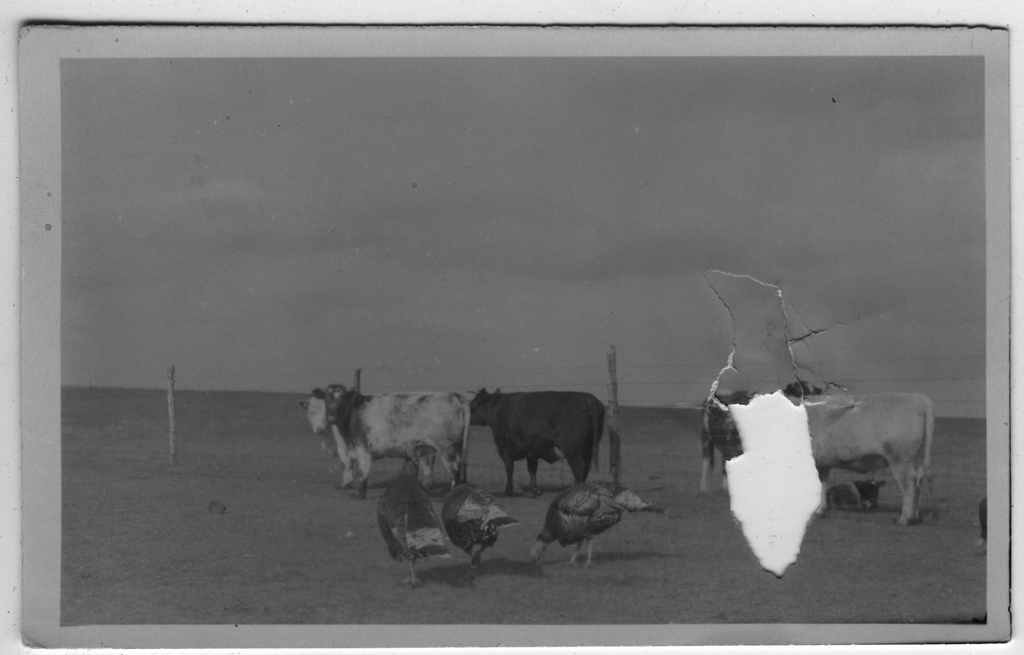
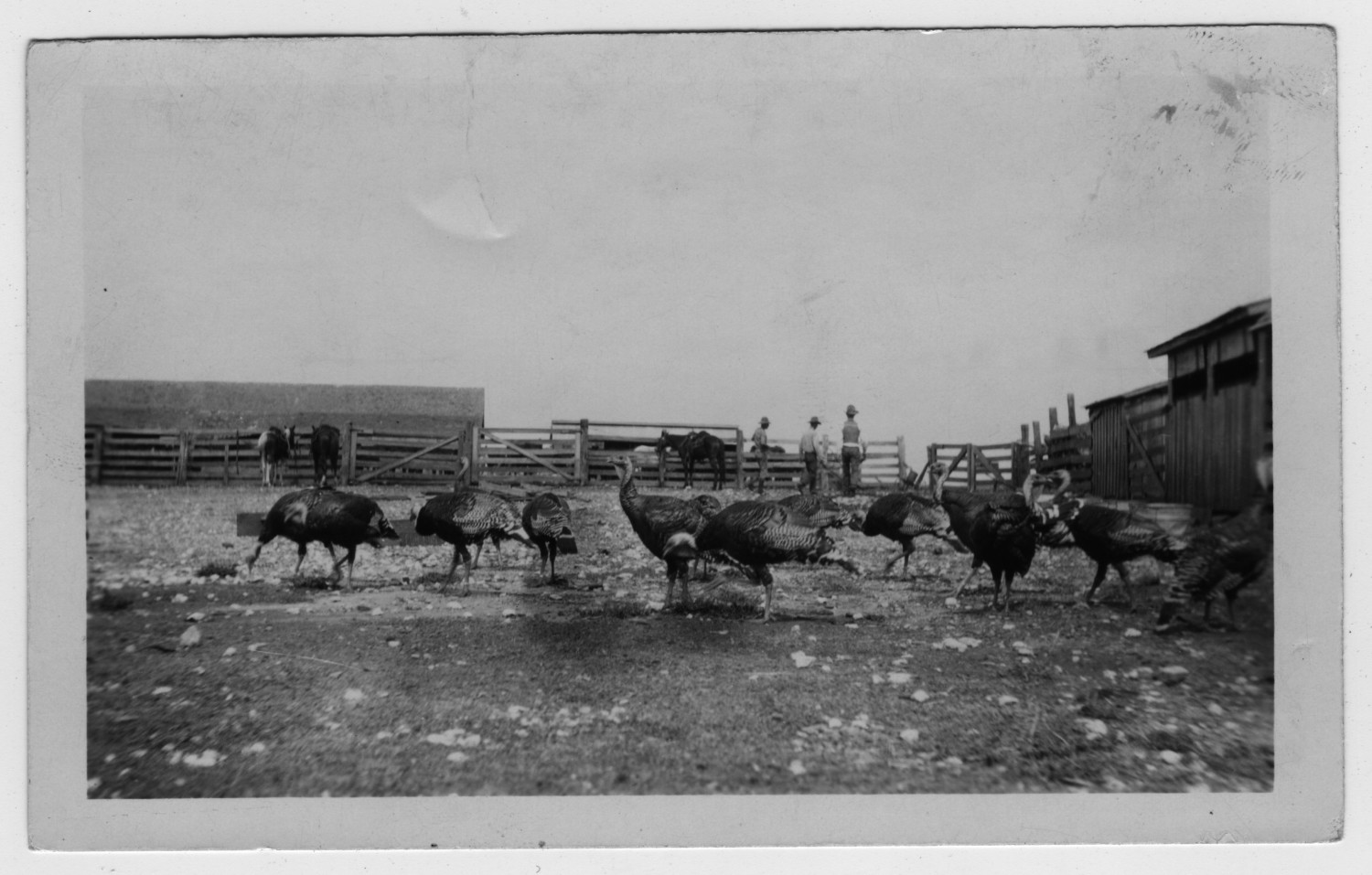
One particularly interesting photograph comes from the 1920s and shows the Peterson Farm in Justin, complete with cows, bulls and turkeys.
The photograph was taken or collected by H.F. Browder, Denton County’s former county agent, and is now preserved in the Harpool Farm Collection through the University of North Texas Libraries’ Portal to Texas History.
It’s a simple black-and-white photograph, but it tells an interesting story. Agriculture wasn’t just something happening somewhere out in the country. It was part of the everyday landscape and economy of the communities surrounding Justin.
The collection also includes a photograph of the Ben Peterson Farm, showing a flock of turkeys feeding in a pen, horses tied along a fence and three men looking toward another enclosure that appears to hold cattle.
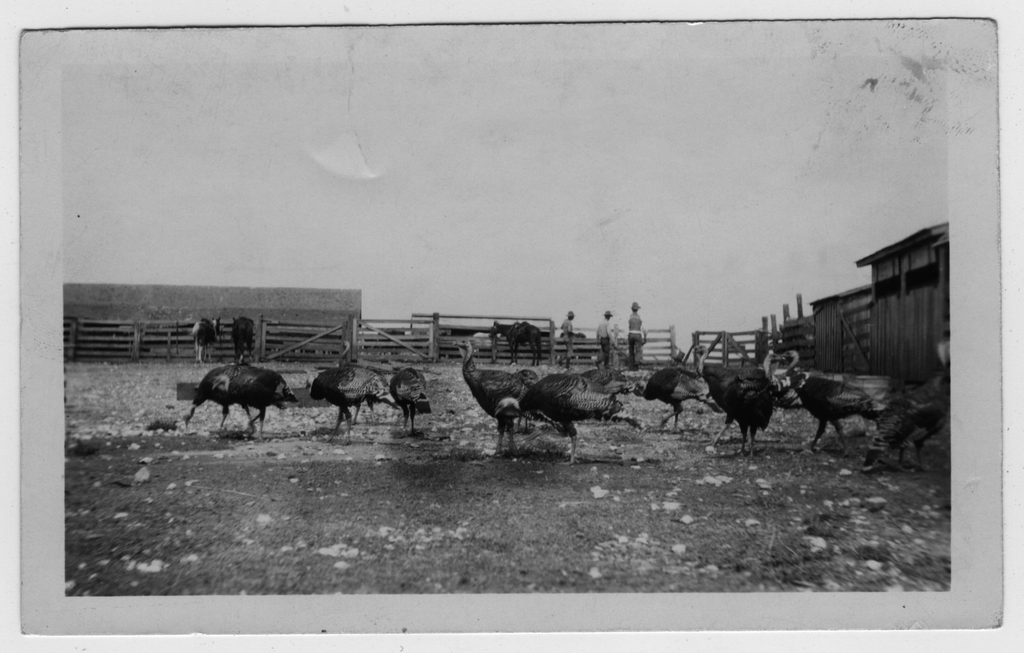
The catalog specifically identifies the birds as “Justin turkeys.” It’s a small historical detail that makes the photograph especially interesting this time of year.
We can’t say these particular turkeys were destined for a Thanksgiving table, but they offer a genuine look at the poultry and livestock being raised on local farms during that period.
The farms that helped feed a growing community
The Peterson photographs are part of a much larger agricultural story in Denton County.
By the early 1900s, farming had become a major part of the county’s economy. The Grand Prairie and Blackland Prairie areas offered rich soil suited to growing staple crops and raising livestock. The Cross Timbers areas were better suited to fruits and vegetables.
Wheat, corn, oats, cotton and sweet potatoes were among the crops grown in Denton County during its agricultural development. By 1920, the county had nearly 100,000 acres devoted to wheat, compared with just over 12,000 acres in 1880. That was an increase of more than 700 percent.
Corn was another important crop. Denton County produced more than one million bushels in 1920 alone. Cotton production had also grown considerably, reaching more than 33,000 bales that year.
For families around Justin, these weren’t simply numbers in an agricultural report. They represented the work of farmers, the animals they raised, the land they cultivated and the products that helped support households and nearby communities.
A home built on hard work
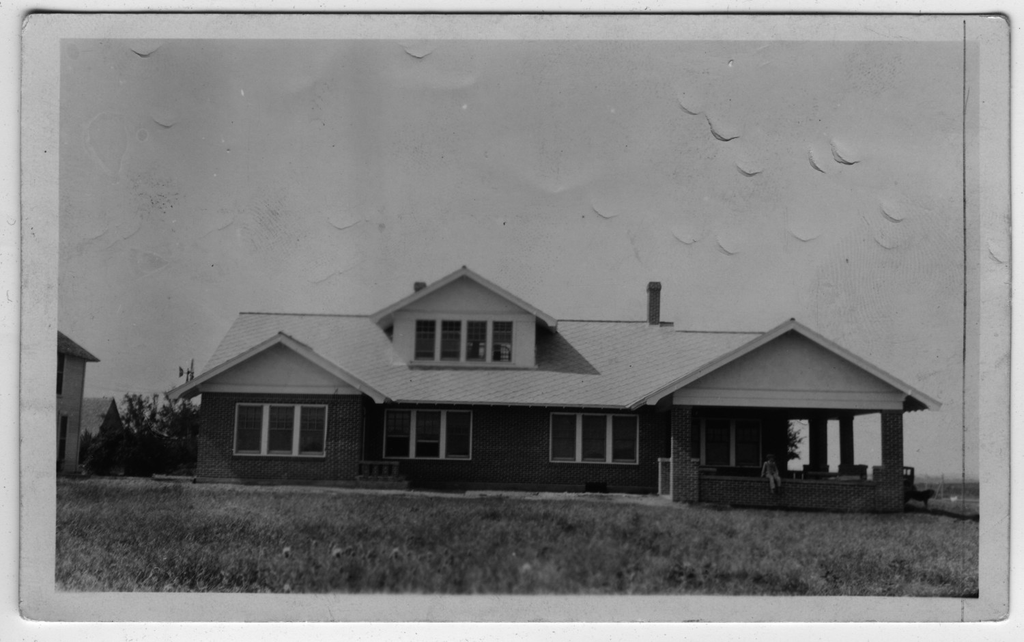
One of the more interesting photographs in the collection is a picture of the O.A. Peterson farmhouse, identified as being in the Justin-Roanoke area.
The brick home has a porch, and a young boy is sitting on a short brick wall. Written on the back of the photograph was the phrase, “The Home That the Sheep Built.”
That inscription offers a wonderful glimpse into the relationship between a family’s livelihood and its home. While we don’t have enough information to establish the full story behind the phrase, it certainly suggests that sheep played an important role in the Peterson family’s success.
These photographs remind us that behind every farm was a family. Farming wasn’t simply a job that ended at the end of the day. It was a way of life that involved the entire household, with generations growing up around the work of the land.
From the farm to the town
Although farms supplied much of the region’s agricultural production, Justin was also developing into an important market community.
Justin began in 1883 with the sale of town lots, and a general store opened within the first year. The Santa Fe Railroad reached the area in 1887, helping connect local farmers and businesses with markets beyond the community.
By 1896, Justin had a population of about 100 and included a general store, grocery, hotel and cotton gin. Grain elevators and other agricultural facilities later helped establish the town as a shipping point for farm products. Texas State Historical Association
The railroad made it easier to move agricultural products to other markets, giving farmers opportunities that weren’t as readily available when they had to rely entirely on local trade.
It also helped Justin grow from a small farming community into a town with businesses and services supporting the surrounding countryside.
The hard years were just around the corner
Life on the farm wasn’t always prosperous.
Although the early twentieth century brought increased demand and better prices for agricultural products, farmers faced a significant downturn beginning in 1920 and 1921. Postwar surpluses contributed to falling crop prices, creating financial difficulties for farmers.
In Denton County, the value of crops fell from more than $13 million in 1920 to approximately $8.7 million in 1925 and $5.5 million in 1930. The number of farms also declined from approximately 4,200 in 1920 to 3,963 in 1930. UNT Library Omeka S+1
The Great Depression would bring additional hardship to farming families throughout the region.
It is a reminder that the beautiful old farm photographs we enjoy today represent more than a simpler time. They also represent long hours, uncertainty, changing markets and families who worked hard to keep their farms going.
A little more gratitude around the Thanksgiving table
Today, we can pick up nearly everything we need for Thanksgiving in one shopping trip. We can order groceries online, choose from dozens of prepared foods and spend more time enjoying the holiday than preparing for it.
But nearly a century ago, families around Justin, Ponder and the surrounding countryside lived much closer to the source of their food.
The photographs of the Peterson farms give us a small window into that world. The turkeys, cattle, horses, farmhouses and families captured by H.F. Browder tell a story about the agricultural roots of our community.
So as we gather around our Thanksgiving tables this year, it’s worth remembering the generations who worked this land long before our neighborhoods, shopping centers and busy roads became part of the landscape.
Their work helped build the communities we call home today.
And perhaps that’s something worth being thankful for.
Photographs courtesy of the Courthouse-on-the-Square Museum, Harpool Farm Collection, The Portal to Texas History, University of North Texas Libraries. Photographs by H.F. Browder, circa 1920.
Do you have old photographs of your family’s farm, Thanksgiving gatherings or life in Justin, Ponder or Krum? We’d love to help preserve those memories. Send your photographs and stories to amber@thejustinjournal.com.